
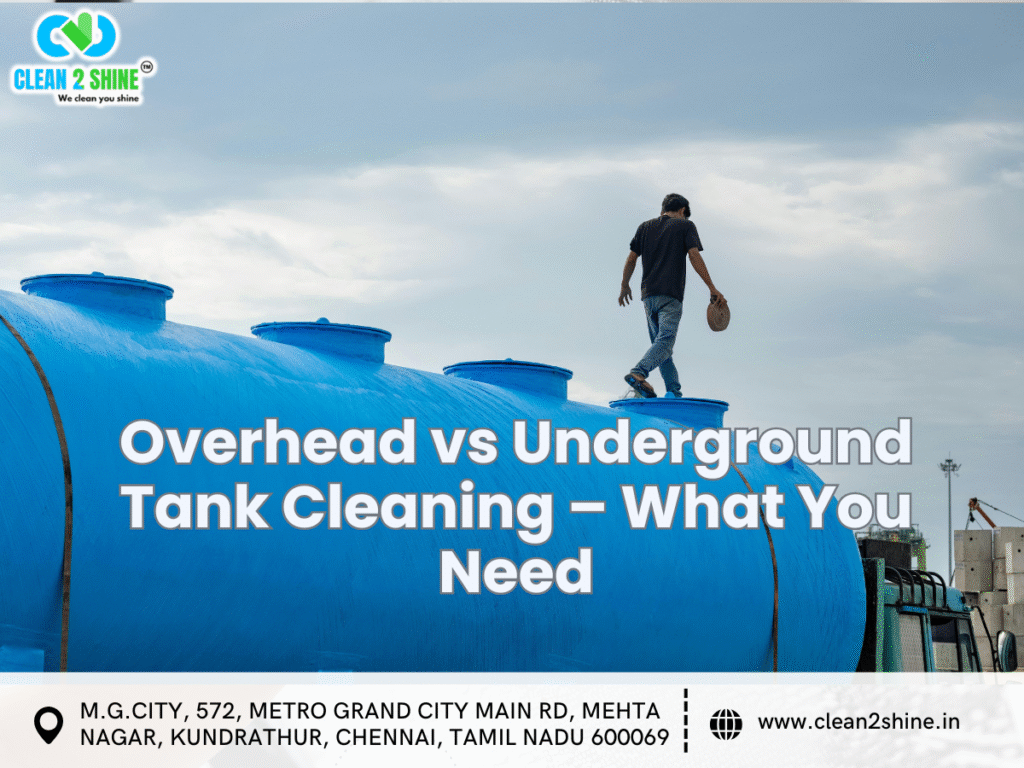
Clean water is essential for every home, but many homeowners overlook the importance of maintaining their water storage systems. In Chennai, where water is stored in both overhead tanks and underground sumps, proper cleaning of both systems is necessary to ensure safe and hygienic water supply.
While both types of tanks serve the same purpose, their cleaning requirements, contamination risks, and maintenance schedules differ. Understanding these differences helps you choose the right service and maintain better water quality throughout the year.
This guide explains the difference between overhead and underground tank cleaning and what you need to keep your home safe.
1. Understanding Overhead and Underground Tanks
Most homes in Chennai use two types of water storage systems:
- Overhead tanks – Located on rooftops, these tanks supply water directly to taps through gravity.
- Underground tanks (sumps) – Located below ground level, these store water before it is pumped to overhead tanks.
Both tanks play a crucial role, and neglecting either can lead to contamination. This is why homeowners rely on professional cleaning services in Chennai for complete maintenance.
2. Why Tank Cleaning Is Important
Over time, both overhead and underground tanks accumulate:
- dirt and dust
- algae growth
- bacteria and germs
- rust and mineral deposits
- insects and debris
If not cleaned regularly, contaminated water flows into your home, affecting health and hygiene. Regular cleaning through deep cleaning services in Chennai ensures safe water for daily use.
3. Overhead Tank Cleaning – Key Features
Overhead tanks are exposed to sunlight, heat, and external conditions. This makes them more prone to algae growth and temperature-related contamination.
Common Issues in Overhead Tanks
- algae formation due to sunlight exposure
- dust and airborne particles
- overheating of water in summer
- bacterial growth
Cleaning Requirements
Overhead tanks require:
- regular inspection
- scrubbing of internal walls
- removal of algae and slime
- disinfectant treatment
Most experts recommend cleaning overhead tanks every 3 to 6 months using professional cleaning services in Chennai.
4. Underground Tank (Sump) Cleaning – Key Features
Underground tanks are less exposed to sunlight but are more prone to sediment accumulation. They store water for longer periods, allowing dirt and sludge to settle at the bottom.
Common Issues in Underground Tanks
- mud, sand, and sludge buildup
- stagnant water
- insect contamination
- foul odor due to organic waste
Cleaning Requirements
Sump cleaning involves:
- sludge removal
- high-pressure washing
- complete drainage and drying
- anti-bacterial treatment
Because of heavy sediment buildup, sump cleaning is more intensive and is best handled by deep cleaning services in Chennai.
5. Key Differences Between Overhead and Underground Tank Cleaning
| Overhead Tank Cleaning | Underground Tank Cleaning |
|---|---|
| Exposed to sunlight | Located underground |
| More algae growth | More sludge accumulation |
| Easier to access | Harder to access |
| Requires frequent cleaning | Requires deep, intensive cleaning |
| Affects daily water supply directly | Stores water for long-term use |
Understanding these differences helps you decide what cleaning service your home needs.
6. Which Tank Needs More Attention?
Both tanks are equally important, but their cleaning priorities differ:
- Overhead tanks affect daily water flow directly, so they need frequent cleaning.
- Underground tanks store water for long periods, so they need deeper cleaning periodically.
For best results, homeowners should clean both tanks regularly using professional cleaning services in Chennai.
7. Signs Your Tanks Need Cleaning
You should schedule tank cleaning if you notice:
- bad smell in water
- discoloration or particles
- reduced water pressure
- slimy or dirty tank walls
- long gap since last cleaning
Ignoring these signs can lead to serious hygiene and health issues.
8. Health Risks of Dirty Tanks
Contaminated water from unclean tanks can cause:
- stomach infections
- skin irritation
- allergies
- bacterial diseases
- unpleasant odor in water
This is why many families combine tank cleaning with home cleaning services in Chennai to maintain complete household hygiene.
9. How Professional Cleaning Services in Chennai Help
Professional cleaners follow a structured process for both tank types:
- draining water completely
- removing dirt, sludge, and debris
- scrubbing internal surfaces
- high-pressure cleaning
- disinfecting with safe chemicals
- final rinse and refill
This ensures your water storage systems are clean, safe, and hygienic.
10. Recommended Cleaning Schedule
For Chennai homes, experts recommend:
- overhead tank cleaning every 3–6 months
- underground sump cleaning every 6–12 months
Regular maintenance prevents contamination and ensures clean water throughout the year.
Why Professional Cleaning Services in Chennai Are Essential
Tank cleaning requires expertise, proper tools, and safe disinfectants. Professional services provide:
- trained technicians
- advanced cleaning equipment
- complete sludge and algae removal
- hygienic disinfection
- quick and efficient service
DIY cleaning may not remove deep contamination, making professional cleaning services in Chennai the safest option.
Clean2Shine – Your Tank Cleaning Experts in Chennai
If you are looking for trusted cleaning services in Chennai, Clean2Shine offers:
- overhead tank cleaning
- underground sump cleaning
- anti-bacterial disinfection
- complete home deep cleaning
- eco-friendly cleaning solutions
Our experienced team ensures your water tanks are thoroughly cleaned and safe for daily use.
Final Thoughts
Both overhead and underground tanks play a vital role in your home’s water supply. Neglecting either can lead to contamination, health risks, and poor water quality.
Understanding the differences between these systems helps you maintain them properly. By choosing professional cleaning services in Chennai, you ensure clean, safe water for your family all year round.
Regular cleaning is not just maintenance—it is essential for healthy living.